
6 MIN READ
NBA Player Prop Hit Rates Explained: L5, L10, Season and Pushes

PickFinder Team •Updated: Nov 06, 2026
A hit rate is the share of games in which a player went over a line. "8 of 10" reads like a sure thing until you ask which ten games, at which line, and in how many minutes. This guide walks through one prop to show what a hit rate can and can't tell you: Damian Lillard's points, rebounds and assists (PRA) for Portland at the Lakers on Friday, November 6, 2026. PrizePicks set it at 29.5, and depending on which column you read, his hit rate was anywhere from 33% to 80%.
The hit rate columns on the board
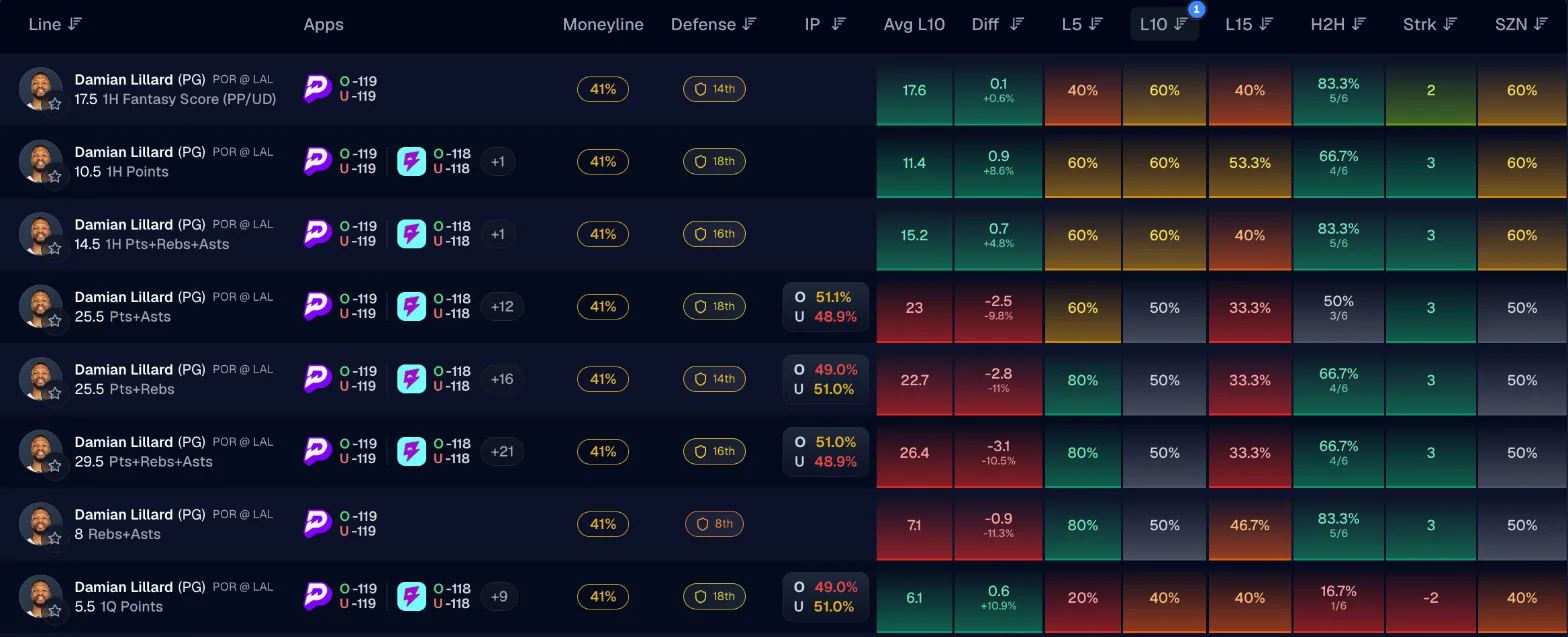
Each row on the NBA props board is one line on one app. Reading left to right after the line: the moneyline (Portland was 41% to win), the opponent's rank against his position for that stat, IP (the over and under implied by sportsbook prices for the same prop), his average over the last 10 games, the gap between that average and the line, then hit rates over the last 5, 10 and 15 games, against this opponent, his current streak, and this season.
For the 29.5 PRA line, those read 80% (L5), 50% (L10), 33.3% (L15) and 50% for the season, with a 10-game average of 26.4, 3.1 below the line. The streak column said 3: he had gone over in three straight games. Four numbers, four different stories. The rest of this guide is about working out which one to believe.
Why the windows disagree
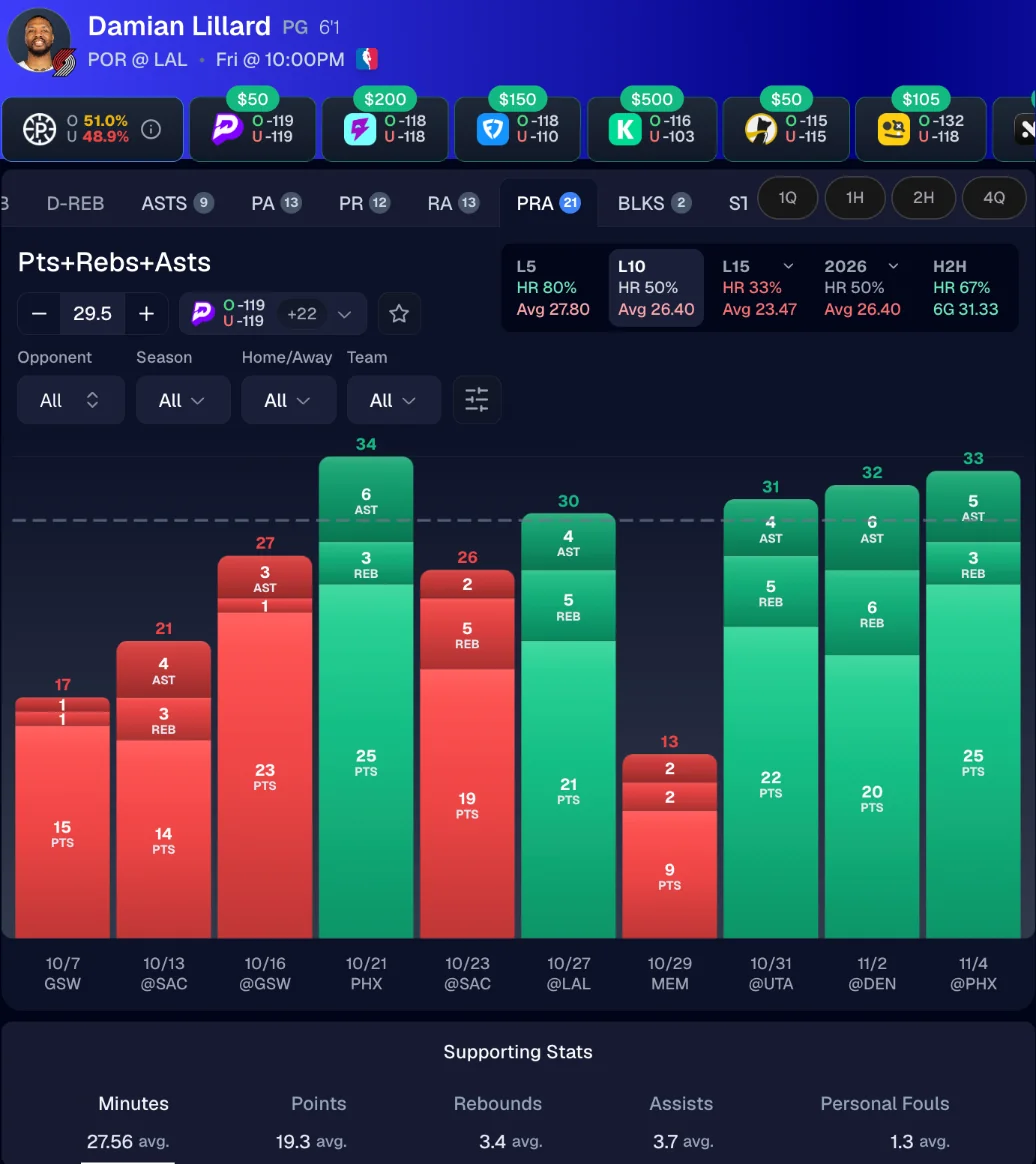
Click into the player and the chart shows the games behind each window. The first three bars, October 7, 13 and 16, were preseason games. Lillard played 19, 23 and 26 minutes in them and put up 17, 21 and 27. With the Season filter on All, they count, and they pull his 10-game and season rates down to 50%.
The last five games tell a different story: 30, 13, 31, 32 and 33. That is four overs in five, and the one miss was not a minutes problem. Against Memphis on October 29 he played 30 minutes and shot 3 of 13 (1 of 9 from three) in a 21-point loss.
Filter to the regular season
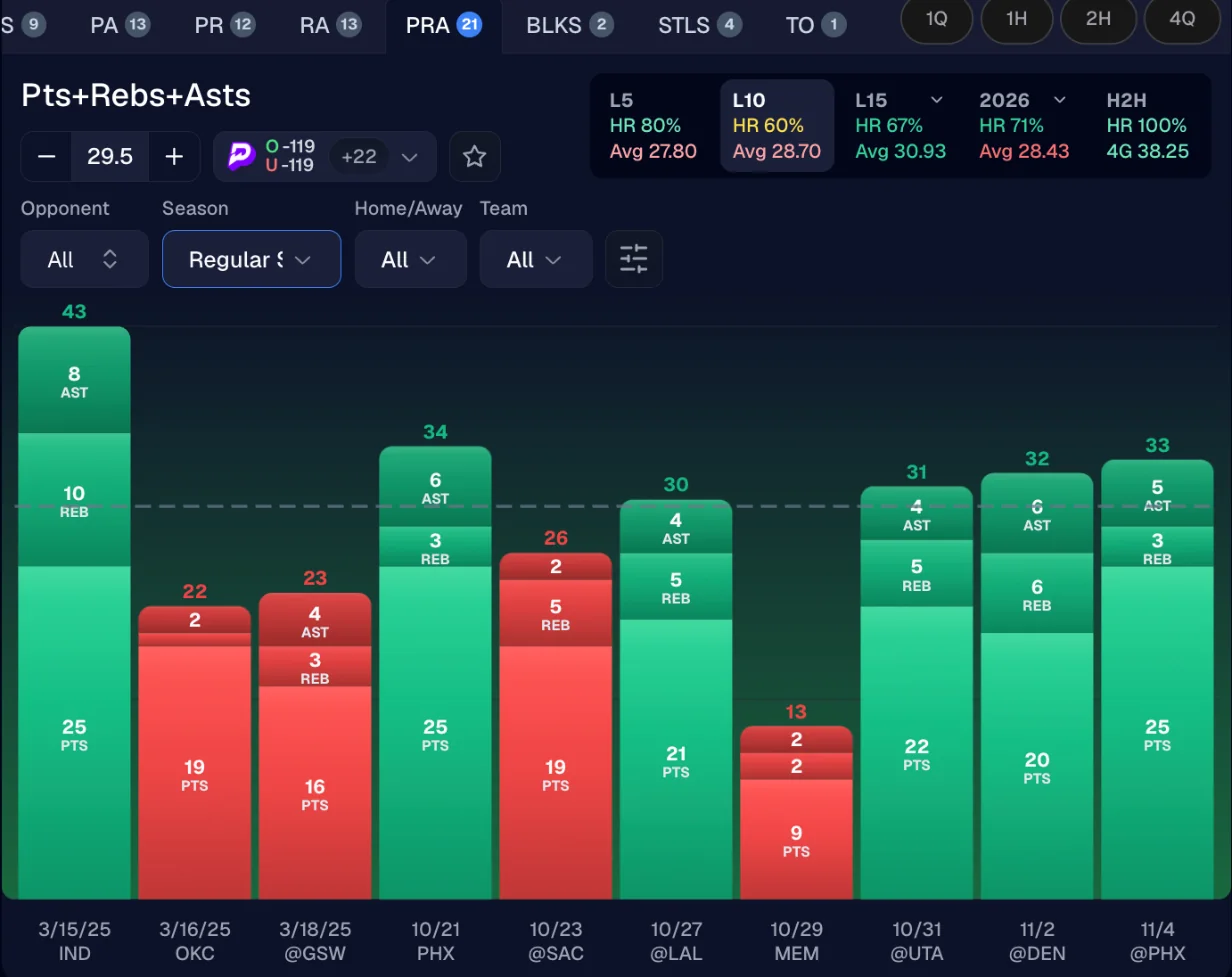
Set Season to Regular Season and the numbers move a lot. His 2026 hit rate goes from 50% to 71% (5 of 7 games, averaging 28.43), and the 15-game rate from 33% to 67%. In October and early November, always check this filter before trusting a 10- or 15-game window.
Notice where the L10 window now starts: March 2025. Lillard did not play last season, so three of those ten games come from his time in Milwaukee, in a different role on a different team. A window that crosses seasons, teams or a long injury is mixing two different players. Here the season column (seven games, all in Portland) is the cleaner read, even though it is small. One game moves a seven-game hit rate by 14 points.
Every half point matters: pushes and alt lines
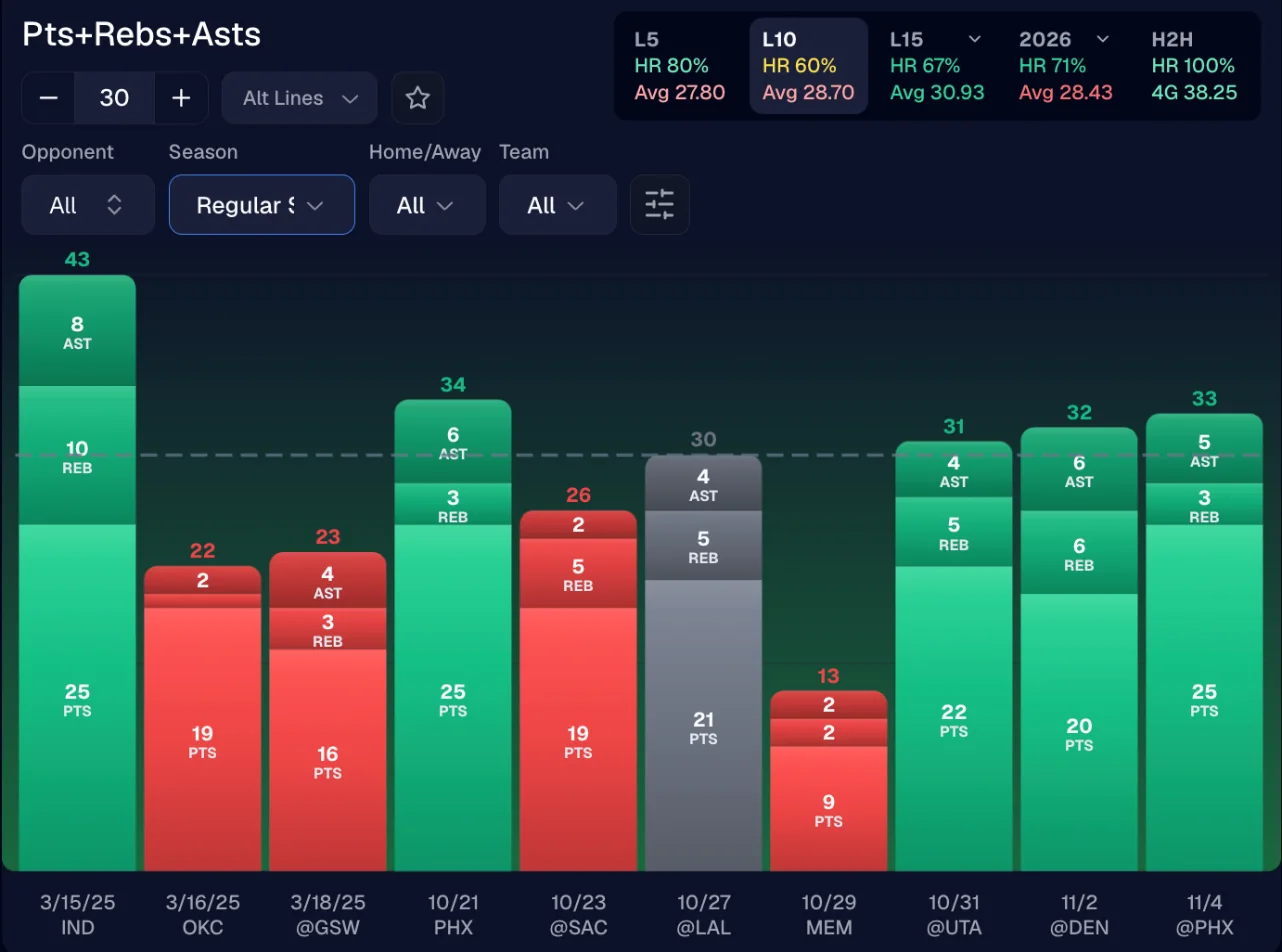
The minus and plus buttons next to the line step through the alt lines the apps are offering. At 30, his game at the Lakers on October 27 (exactly 30) turns gray. That is a push, and PickFinder counts a push as reaching the line, so the 10-game rate still reads 60%. Move to 30.5 and the same game becomes a miss: the 10-game rate drops to 50% and the season rate to 57%.
Two takeaways. Whole-number lines are generous to the over in the hit rate column, while most apps grade a tie as a push, not a win. And a hit rate is only as stable as the closest results: if several games landed within a point of the line, small line moves will swing the rate.
Compare against the lines that were actually posted
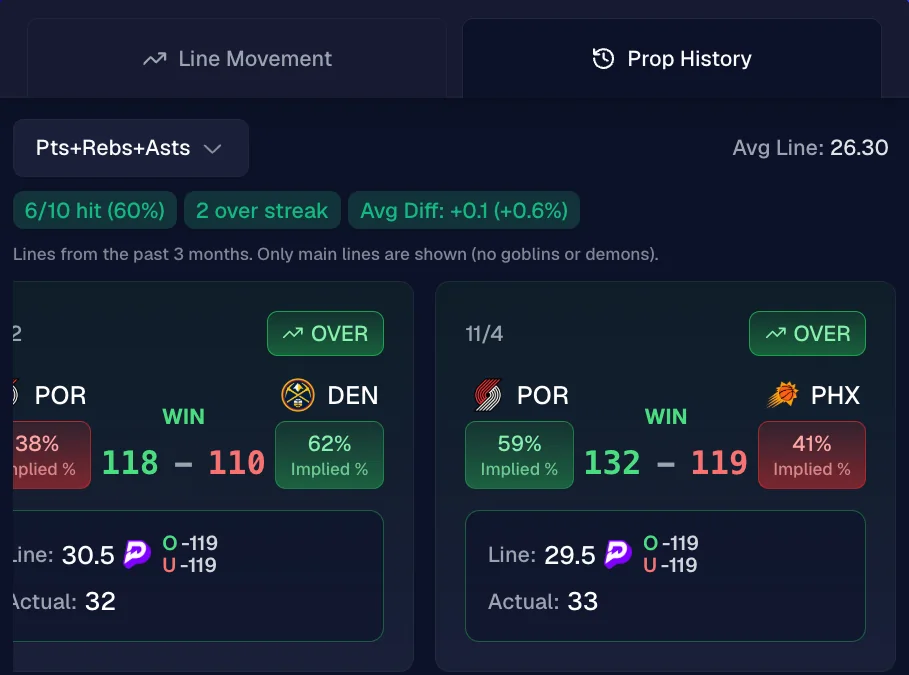
Hit rates test every past game against today's line. Prop History, next to Line Movement, tests each game against the line that was posted for it. Lillard's PrizePicks PRA line has ranged from 16.5 in his first preseason game to 32.5 on October 31, when he finished with 31. He went over 6 of his last 10 posted lines. Three of those ten were preseason; in the regular season he is 4 of 7.
The most useful number on this card is Avg Diff: +0.1. Over ten games, he has beaten his posted line by a tenth of a point on average. The app has been pricing him almost exactly right, so if you see an edge in a hit rate, it has to come from something the line hasn't caught yet, such as an injury, a rest day or a matchup.
Check the minutes behind the rate
Every hit rate sits on top of playing time. Open the MIN tab or the supporting stats under the chart. Lillard has averaged 29.7 minutes in his seven regular-season games, against 19 to 26 in the preseason, which is the whole reason the filter mattered. When a player's minutes jump because a teammate is out, or drop because of a blowout or a minutes limit, his older games stop describing tonight. Our guide to how injuries change NBA player props covers the With and Without filters for exactly that.
A hit rate checklist
- Set Season to Regular Season, especially in the first month.
- Read L5, L10, L15 and the season together, and note when a window crosses seasons or teams.
- Step the line through the alt lines to see how close the misses were.
- Open Prop History to see how he did against the lines that were actually posted.
- Confirm the minutes behind the games, then check the defense against his position.
For the full research flow, from the board to the Pick Builder, see how to research NBA player props.


