
5 MIN READ
How Weather Affects NFL Player Props: Wind, Rain, Cold and Domes

PickFinder Team •Updated: Nov 06, 2026
Most NFL weather doesn't move player props. A cloudy, 50-degree afternoon plays like a dome. What does matter is wind, then heavy rain and snow, then extreme cold, roughly in that order. This guide covers how to read the Weather tab on any NFL player page, the thresholds behind its grades, and three forecasts from Sunday, November 8, 2026 that show the difference: rain and gusts in Seattle, a gusty but fine afternoon in Foxborough, and a dome in Minneapolis.
The thresholds that matter
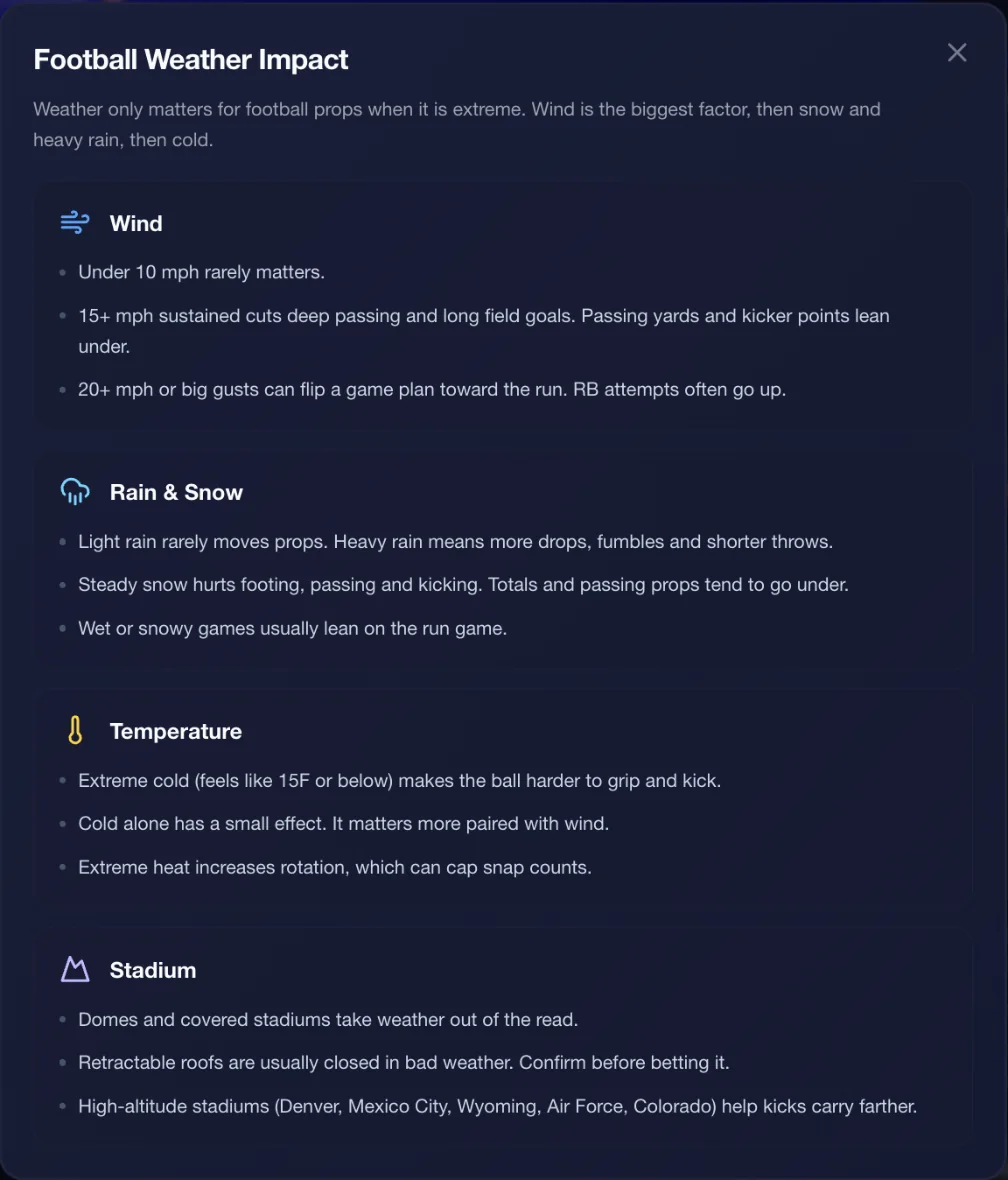
The info button on the Weather card opens the rules PickFinder uses to grade a forecast. In short:
- Wind. Under 10 mph rarely matters. Sustained wind of 15 mph or more, or gusts of 25 or more, cuts deep passing and long field goals. At 20 mph sustained, or gusts in the 30s, game plans start shifting to the run.
- Rain and snow. Light rain rarely moves props. Heavy rain means drops, fumbles and shorter throws. Steady snow hurts footing, passing and kicking.
- Temperature. Extreme cold (feels like 15°F or below) makes the ball harder to grip and kick, and matters most when paired with wind. Extreme heat adds rotation, which can cap snap counts.
- Stadium. Domes and covered stadiums take weather out of the read. High-altitude stadiums help kicks carry.
Those rules turn into a grade for passing, kicking and rushing: Neutral, Slight dip, Downgrade or Big downgrade. When passing is downgraded, rushing gets a Boost, because bad-weather games tilt toward the run.
Seattle: wind plus rain
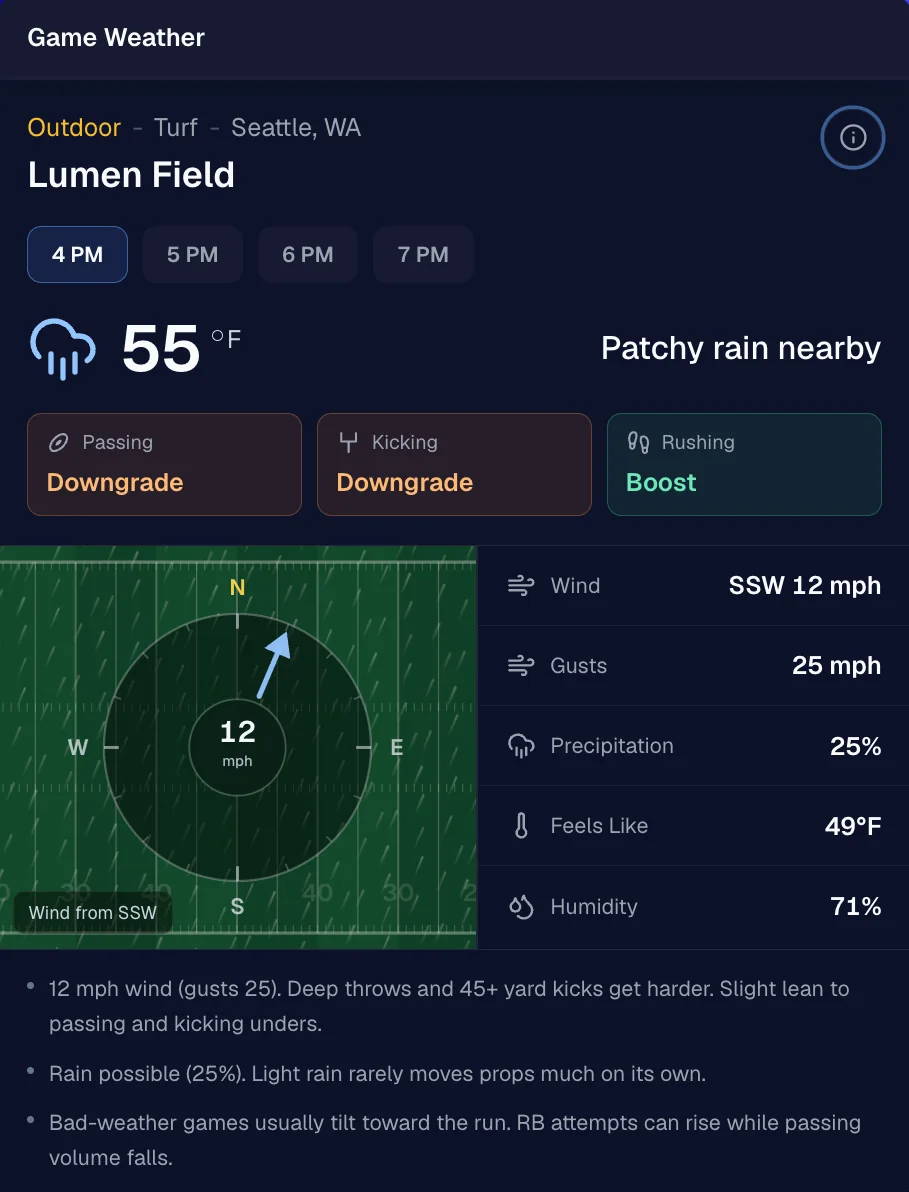
Arizona at Seattle had one of the roughest forecasts of Week 10. Two days out, the forecast at Lumen Field for kickoff was 55°F with patchy rain nearby (a 25% chance), wind out of the south-southwest at 12 mph and gusts to 25. The gusts reached the 25 mph threshold, so passing and kicking were graded Downgrade and rushing Boost. The notes under the card spell out why, including that the 25% rain chance on its own "rarely moves props much."
What does a downgrade mean in practice? Take Jaxon Smith-Njigba's receiving yards line of 92.5 in that game. He had gone over in 8 of his last 10 games, averaging 116.5 yards. A forecast like this doesn't erase that history. It is a tiebreaker: a reason to prefer a lower alt line, skip a thin edge or favor the running back's attempts over a receiver's yards. It is rarely a reason to bet against a player's whole track record on its own.
Foxborough: gusty, but still neutral
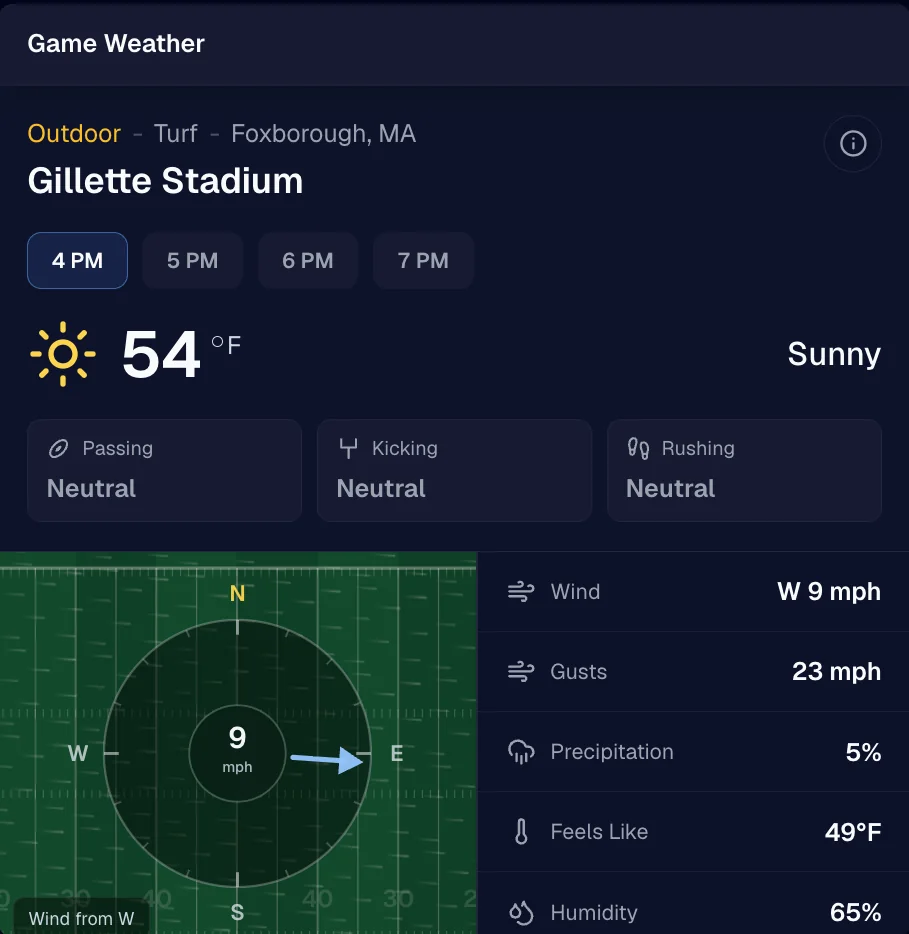
Green Bay at New England was forecast at 54°F and sunny, with a 9 mph west wind and gusts to 23. That sounds windy, and on the field it may feel it, but sustained wind under 10 mph and gusts under 25 grade Neutral across the board. Gusts come and go. The sustained number is what shapes a game plan over four quarters.
The compass shows where the wind is coming from, and the hour buttons (4 PM to 7 PM here) show how the forecast changes through the game. A wind that builds in the second half matters more for a kicker's last attempts than one that dies down. For the passing side of this game, see our breakdown of Jordan Love's passing yards line.
Minneapolis: the roof is on
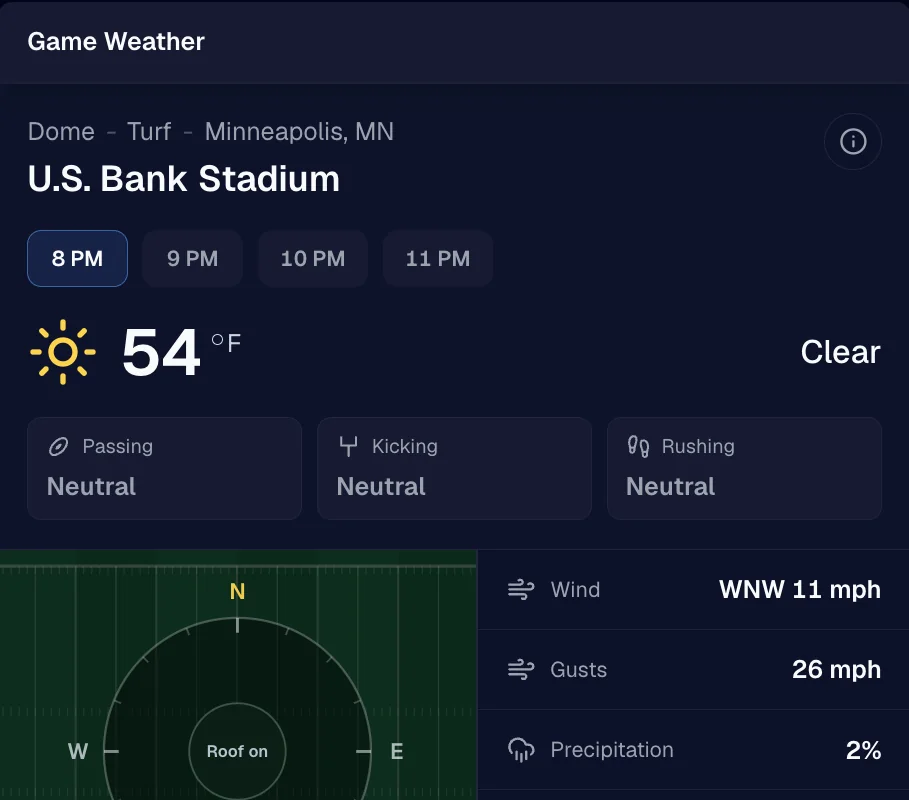
Buffalo at Minnesota on Monday night is the other side of the same day's weather. Outside U.S. Bank Stadium the forecast had an 11 mph wind and gusts of 26, higher than Seattle's. Inside, it doesn't matter. The card labels the stadium as a dome, the compass reads "Roof on," and every grade is Neutral.
Check the stadium type before you react to a scary city forecast. Domes and covered stadiums such as SoFi take weather out of the read entirely. Retractable roofs are usually closed in bad weather, but confirm it close to kickoff before you bet on the weather either way.
Which props weather moves
- Passing yards and longest completion. The first to drop in strong wind, because deep throws go first.
- Receiving yards and longest reception. They follow the quarterback. Short-area receivers and tight ends are hurt less than deep threats.
- Kicking points and field goals. Long attempts are the most wind-sensitive. Short kicks and extra points change much less.
- Rush attempts and rushing yards. Can rise when a team leans on the run, which is why rushing gets a Boost.
- Game totals. Strong wind and heavy snow both lean under.
Timing: forecasts change
A forecast two days out is a guess, and wind forecasts move more than temperature. Check the Weather tab when you first research a game, then again on game day. If a forecast worsens, lines on passing and kicking props can move with it, so the earlier you notice, the better the number you get.
Weather checklist
- Check the stadium type first: dome, covered, retractable or outdoor.
- Read sustained wind and gusts against the 15 and 25 mph marks.
- Separate light rain (rarely matters) from heavy rain or snow.
- Use the hour buttons to see how conditions change during the game.
- Treat the grade as a tiebreaker on top of the player's numbers, and re-check on game day.
Weather is one step in the process. The full workflow is in how to research NFL player props, and for receivers in particular, see how to research receiving yards props.


